Sit Less, Move More
To make wellbeing part of your 9-to-5
Our bodies weren’t designed to sit all day, but it’s become the norm.
Movement matters. But if your job keeps you glued to a desk, finding the time (and the energy) to move can feel impossible.
In today’s digital world, we’ve trained ourselves to sit for long hours through meetings, emails, deadlines, even lunch.
The Problem: sitting for too long is taking a toll on our health.
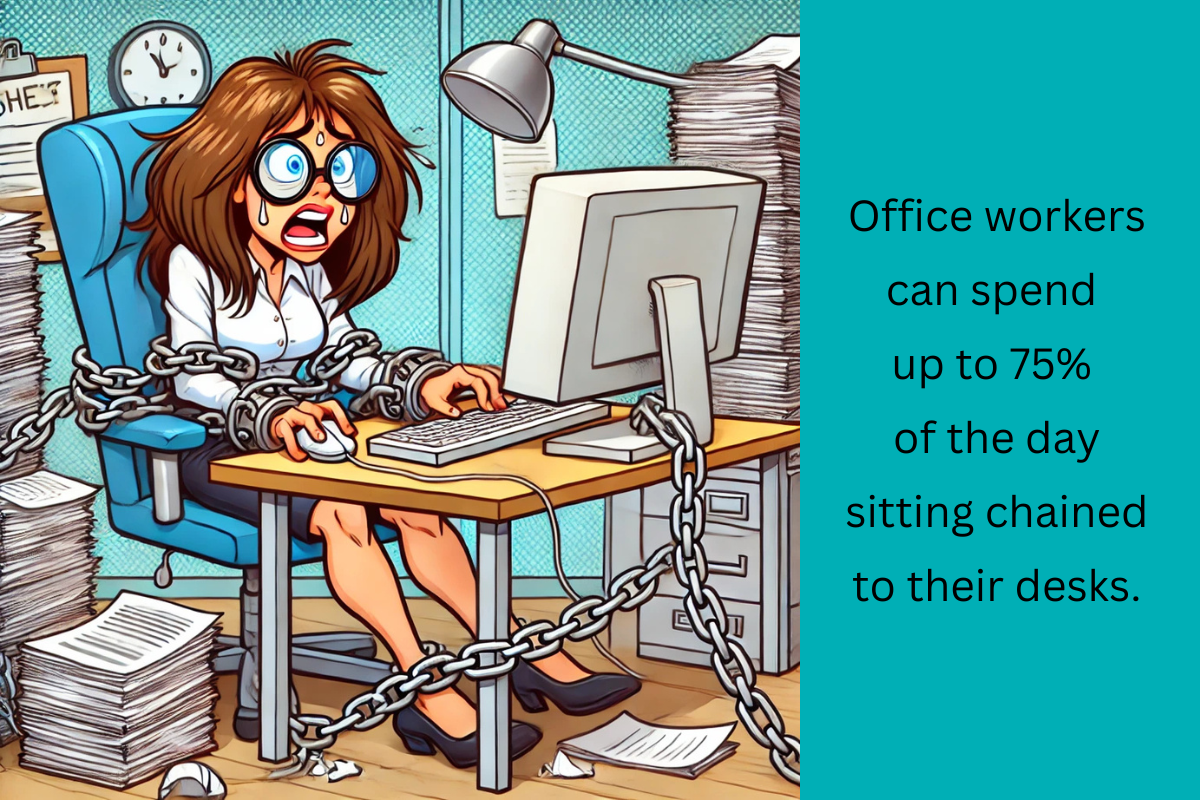
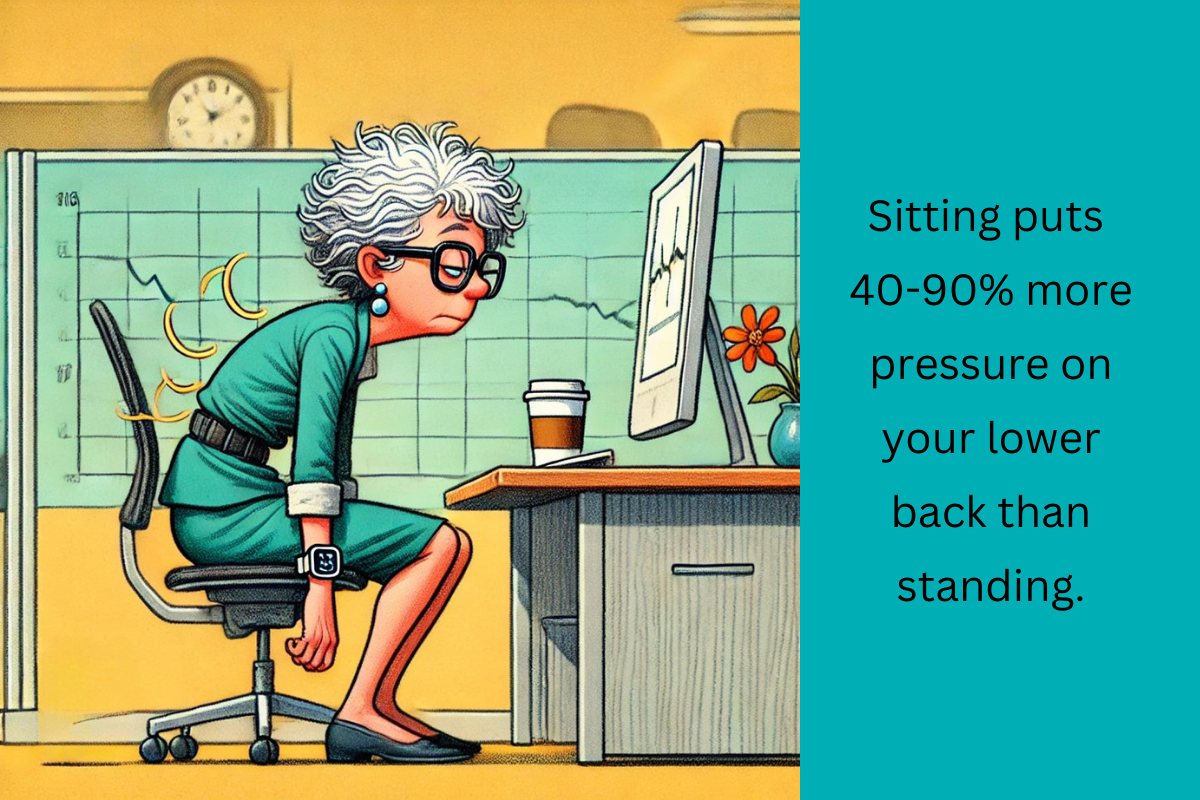
Sitting isn’t just a posture - it’s a pressure multiplier.
When you sit, your lower back takes on 40-90% more pressure than when you stand. Over time, that pressure builds into stiffness, discomfort, and long-term pain.
And because sitting feels “normal,” we rarely notice the toll until it becomes impossible to ignore.
The Solution: short bursts of movement throughout the day help undo some of that pressure and restore mobility.
5-minute Active Breaks
help you break the sitting cycle
Here’s a quick way to start today:
1. Set an hourly alarm.
It’s easy to get absorbed by work and end up sitting for long periods of the day. An hourly alarm is one way to build in a simple prompt to break the sitting cycle. Think of it as a gentle reminder that your body needs a stretch and refresh.
2. Get up and move for five minutes every hour.
Short, regular breaks release tension, improve circulation, and give your brain the reset it needs so you can do your best work. Walk to the kitchen, climb a flight of stairs, stretch your shoulders, or walk around the room - just five minutes is enough to refresh your focus and your body.
3. Check in with your body, brain, and energy.
Micro check-ins build awareness and create an easy feedback loop to help you understand what works best for you. After each break, pay attention to how you feel. Are you calmer, energised, more creative?
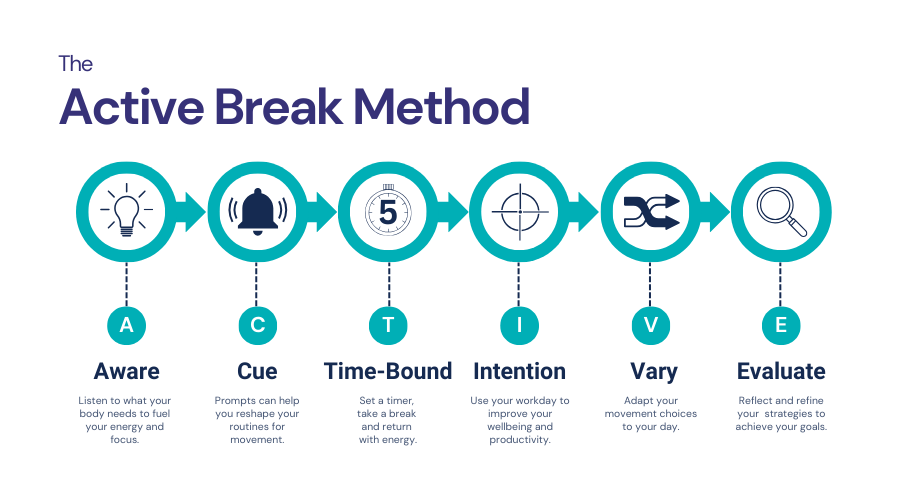
The ACTIVE BREAK Method underpins our course, workbooks and coaching, from how we introduce movement to how we help you use your existing routines to create new habits, reflect, and experiment with strategies that fit your life.
It starts with becoming AWARE: noticing how you feel throughout the day. The tension in your shoulders. How long you’ve been sitting. The moments when your focus drifts. Awareness is the first shift - once you begin to notice, change becomes possible.
From there, you can begin to use natural CUES in your day - the end of a meeting, a calendar notification, a coffee refill - to prompt TIME-BOUND movement.
Taking a break with INTENTION means it’s no longer something you fall into - it’s something you choose. And those small, deliberate choices start to stack up.
There isn’t a one-size-fits-all, not for everyone and not even for every day. Being able to VARY your active breaks keeps things flexible and engaging. Some days it’s a stair break. Other days, it might be a stretch, a breath, a stand, or a slow walk around the room.
And finally, to know what’s working (or not), you need feedback. Without it, it’s hard to EVALUATE how movement - or sitting - is affecting your energy, stress, and focus.